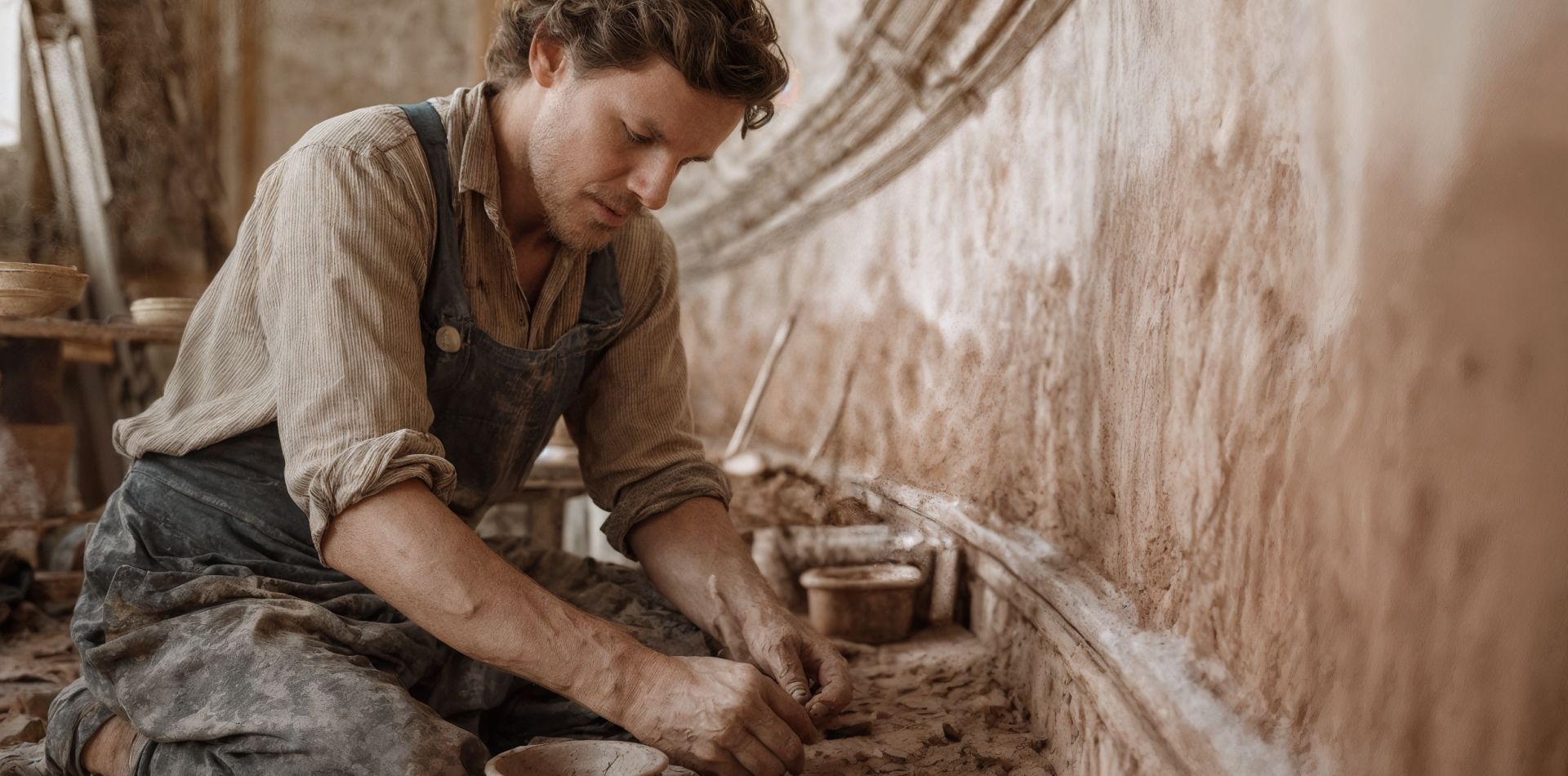
Surface preparation
The surface must be clean, dry, solid, and capable of bearing load. All contaminants and substances that reduce adhesion (such as form-release oils, construction residues, or flaking paint layers) must be thoroughly removed.
Irregularities should be leveled with FinishSpachtel D60 or FinishSpachtel D70.
To achieve a high-quality result, it is essential to ensure proper absorbency and surface texture. Substrates with excessively high or low absorbency, or those that do not provide adequate mechanical grip, should be pre-treated with Quartz Primer Grosso.
Preparation before application
Before applying the ready-to-use Homo mixture, dampen the substrate with clean water — depending on the surface type, room temperature, and humidity. This is especially important for clay or lime-based surfaces.
Drywall or surfaces primed with Quartz Primer Grosso do not require pre-wetting.
Empty the contents of one Homo package (12 kg) into a container with 4.5–5.5 liters of clean room-temperature water. Mix with a low-speed electric mixer until a smooth, lump-free texture is achieved. Let the mixture rest for 10 minutes and remix before use.
Adjust the consistency with a small amount of water if needed. It is recommended to prepare only the amount you plan to use within one working day.
⚠️ Always follow the water-to-powder ratio indicated on the packaging. For machine application, follow the equipment’s operating manual.
Application
Apply in two coats with a total thickness of no more than 3 mm using a hawk and a metal trowel.
Apply the first coat in broad, sweeping motions. Avoid overworking the surface to maintain its texture and integrity.
After 2–3 hours (depending on conditions), apply a second, thinner coat using a slightly wetter mix — to correct imperfections and enhance the visual finish.
Finishing and polishing
Wait 30 minutes to 2 hours after applying the second coat — until the surface loses its shine and no longer shifts under the trowel.
Then polish using a Venetian trowel (stainless steel) or a plastic polishing tool with irregular, multidirectional movements.
If the material is still too soft or sticks to the trowel — wait longer. If it has dried too much, lightly re-moisten with a sprayer or damp trowel.
Let the coating dry naturally — avoiding strong drafts, direct sunlight, or heat sources.
Finish texture options
- Polished finish with compressed grain — ideal for a refined look and enhanced durability. Use a flexible stainless steel or plastic tool. Avoid rigid metal blades that may leave dark streaks.
- Open-grain sponge finish — recommended for less even surfaces. Once partially set, gently rub the surface with a damp sponge in circular motions to achieve a soft, natural texture by bringing sand particles to the surface.
Protection and maintenance
Once fully dry, the surface should be treated with Velatura Vintage Matt wax emulsion or another suitable finish. This enhances water resistance, dirt repellence, and emphasizes the depth of texture.
One of clay plaster's key advantages is its ease of repair.
If damage occurs (scratches, chips, dents), the surface can be locally restored by applying a small amount of Homo in the matching color, smoothing it out, and reapplying the finish layer.